MeetOnChai

Service

Payment Gateway & API Integration

eSewa, Khalti, UPI, Razorpay and Stripe wired in properly, including the payments that fail.

MeetOnChai Studio integrates payment gateways and third-party APIs into websites, stores and apps: eSewa and Khalti in Nepal, UPI and Razorpay in India, and Stripe for international cards. We build the full money path, including webhooks, verification, refunds and failed payments, not just the happy-path button. Most integrations into an existing product take a few weeks depending on the providers involved.

What we deliver

What's in the box.

  • Nepal: eSewa and Khalti, alongside cash on delivery where it makes sense
  • India: UPI, cards, net banking and cash on delivery, with Razorpay
  • International: Stripe for cards and subscriptions
  • Webhook handling with signature verification, retries and idempotency so no order is missed or doubled
  • Third-party API integrations: shipping, messaging, CRMs and internal systems

The happy path is the easy 20 minutes

Any developer can get a payment button working in a demo. The real work is everything around it: the customer who closes the tab after paying, the webhook that arrives twice, the wallet that times out, the refund requested a week later. Each of those, handled badly, becomes a support ticket or a lost order.

We design for those cases from the start. Payments are verified on the server, webhook events are checked for authenticity and processed once even if they arrive twice, and every state change is logged. When something odd happens, you can see exactly what and when.


Pick the gateway your customers already trust

The right gateway depends on who's paying, not on what's easiest to integrate. In Nepal that usually means eSewa and Khalti, as on Giftkdiu. In India it means UPI first, with cards, net banking and cash on delivery behind it, as on Oryizon. For international customers and subscriptions, Stripe is usually the cleanest choice.

Plenty of businesses need more than one. A Nepali brand selling to diaspora customers might want wallets for local buyers and cards for everyone else. We plan for that up front so adding a second provider later doesn't mean rewriting checkout.

One payment layer, several providers

Every provider has its own API, its own webhook format and its own idea of what a failed payment looks like. Integrate them one at a time and you end up with the same checkout logic written twice, tied to whichever provider came first.

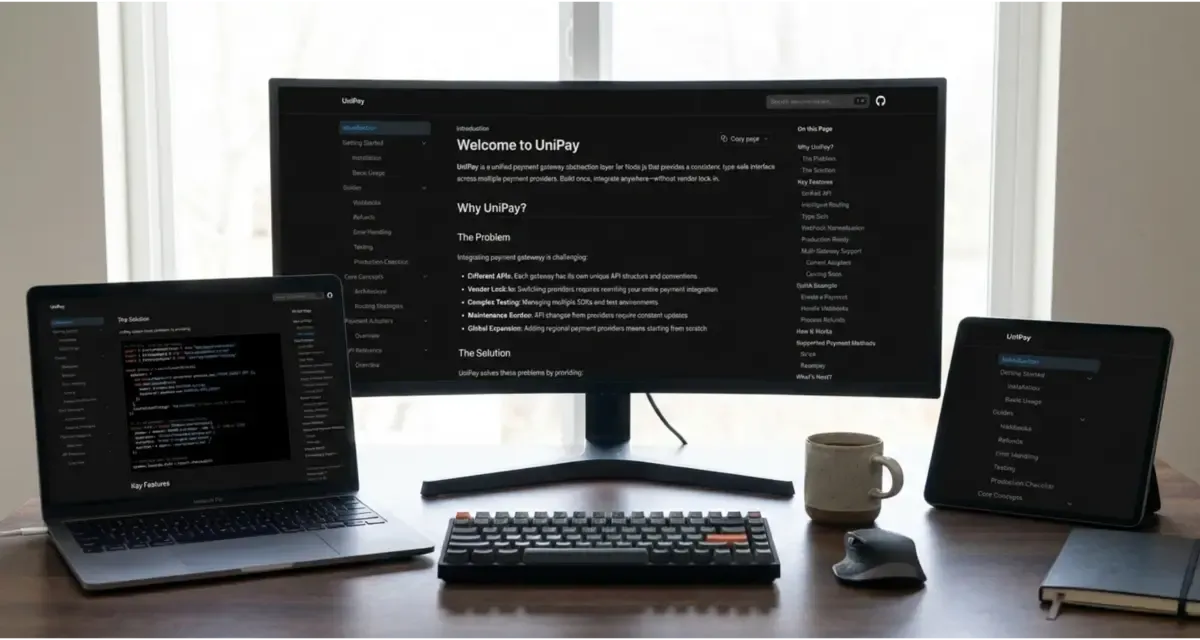
Our open-source UniPay project came out of exactly this problem: a type-safe layer that puts Stripe and Razorpay behind one interface and normalises their webhooks into a single event shape. We bring the same thinking to client work, so your order logic talks to one interface and providers can be added or swapped without touching it.

Process

How payment gateway & api integration runs with us.

  1. 01

    We map every way a payment can end

    Paid, failed, cancelled, timed out, paid twice, refunded. We list the outcomes first, because the bugs live in the ones nobody planned for.

  2. 02

    We verify on the server, every time

    A browser redirect saying 'success' isn't proof. Each payment is confirmed with the provider before an order is marked paid.

  3. 03

    We test in sandbox, then with real money

    Sandboxes don't behave exactly like production. After sandbox testing we run small live transactions before your customers do.

  4. 04

    We leave you a way to reconcile

    Orders and provider records should match. We log every payment event so you can see what happened to any transaction without opening a gateway dashboard.

FAQ

Payment Gateway & API Integration questions.

How long does web app development take?

MVPs typically take 4-8 weeks. Full products range from 2-4 months. We break projects into sprints and deliver working features every 2 weeks, so you see progress continuously.

Will your development agency sign an NDA?

Yes, absolutely. We're happy to sign your NDA before any detailed discussions. Your intellectual property and ideas are protected throughout our engagement.

Can you integrate eSewa, Khalti, UPI and other local payment gateways?

Yes. We've shipped stores taking eSewa and Khalti in Nepal and UPI, cards, net banking and cash on delivery in India, and we use Stripe or Razorpay for international payments. We pick the gateway based on where your customers are, not what's easiest for us.

Should my store be custom-built or on WooCommerce or Shopify?

It depends on how unusual your selling is. If you sell standard products with standard checkout, a proven platform is cheaper to build and run. If your ordering flow is the product, like combo builders, WhatsApp checkout or delivery slots by city, a custom Next.js build usually pays for itself. We've done both and will tell you which fits on the first call.

Every project starts with a conversation

Got an idea? Let's talk over chai.

A free 15-minute call. No pitch deck, no obligation. You leave with an honest read on what to build first.

  • We reply within 24 hours, usually much sooner.
  • NDA signed before you share the details.
  • Based in Kathmandu, working with Nepal, India and worldwide.